
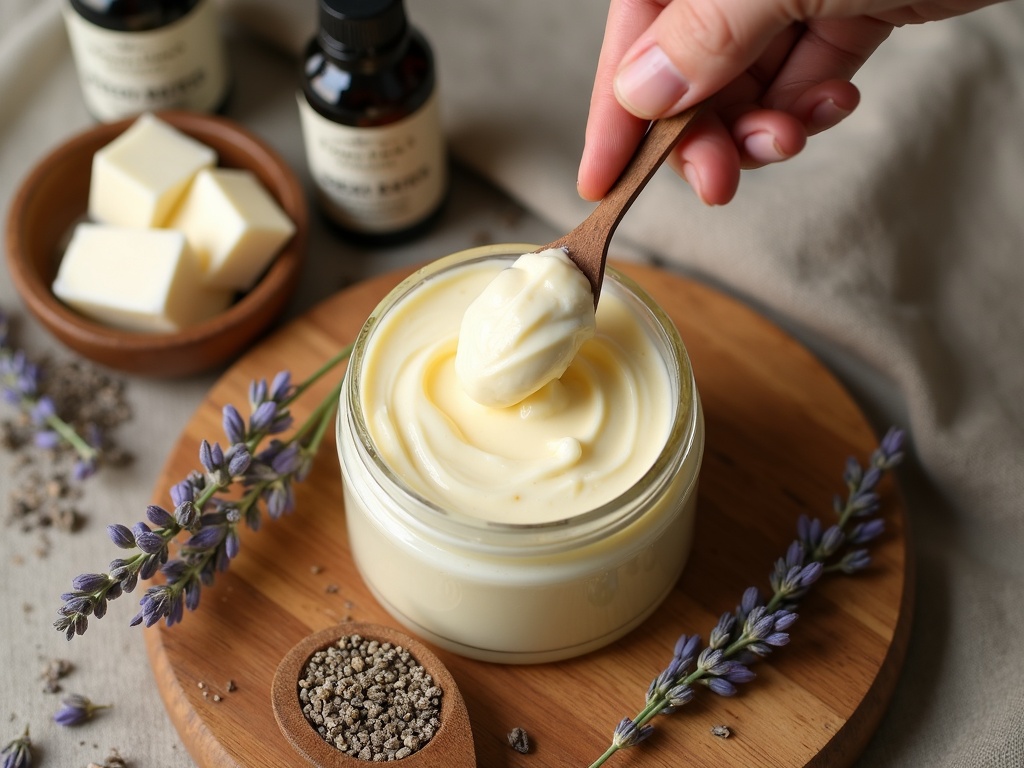
Understanding Body Butter Ingredients: What Your Skin Actually Needs
Most people buy body butter based on the scent or marketing label claims. But the ingredients list is what will tell you if it helps your skin or just be there. The body butters that are effective versus the designer ones that aren’t have a person behind them who understands the purpose of the ingredients.
What is Body Butter?
Body Butter is not just thick lotion. The point is to get concentrated moisture through plant-based fat and oils to the epidermis where the body can actually use it. Lotions are watered down and have emulsifiers to keep it all from separating; body butter is oil and butter with essentially no water with some emulsifiers to keep it all blended. Therefore, instead of getting surface level moisture for a second, you get actual healing instead of temporary relief.
Body Butter should be thick but not greasy, if it absorbs in two seconds there are too many fillers. If it never absorbs and just sits on the skin, something’s wrong with it. It takes about one to two minutes for a good quality body butter to absorb without leaving a greasy residue.
The Base Ingredients
Shea butter makes itself known in most high-quality body butters and for good reason. It contains vitamins A and E as well as fatty acids which are almost identical to what healthy skin produces. This is not a marketing gimmick; shea butter is similar in composition to what healthy skin makes. Therefore, it repairs damaged skin and retains moisture where you need it most. Raw/unrefined shea butter works best as opposed to the white stuff that’s ultra refined because it has less compounds.
Cocoa butter does similar things but in a harder consistency. It melts at body temperature, hence why it absorbs well even though it’s solid in the tub and the consistency becomes softer upon blending. Antioxidants present in cocoa butter help with elasticity, thus it’s helpful for areas that stretch and stress.
Coconut oil is controversial because it clogs pores on your face, but for body skin it’s effective. The fatty acids absorb well and give some antimicrobial protection. Fractionated coconut oil (where certain fatty acids are removed) has the same properties except it stays liquid and absorbs faster, but some benefits are removed this way.
Carrier Oils That Actually Do Something
Naturally Linda’s Natural Body Butter incorporates carrier oils that work well with the natural process of sebum which isn’t just there to allow better spreadability.
Jojoba oil is technically not an oil (it’s a liquid wax ester), but this detail is important because it closely resembles sebum. Therefore, your skin recognizes it and uses it, instead of letting it sit there. Those with oily skin find consistency better with jojoba products because the skin doesn’t over respond and try to make more oil, thinking it needs it.
Sweet almond oil absorbs well and provides vitamins without leaving any residue behind. Therefore, it’s good for irritated skin as well because it doesn’t exacerbate anything and its vitamin E components help self-preserve which is important more than people think.
Rosehip oil contains retinoids (the expensive anti-aging ingredients) and essential fatty acids for skin regeneration. A little bit goes a long way, which often relegates rosehip oils further down on ingredient lists even in high quality products.
What To Avoid
Mineral oil and petroleum jelly provide a barrier that prevents water loss from getting out, but they don’t actually give your skin anything. They are occlusive (sealing things in) without any nutritional value. Some dermatologists support their use for extremely damaged skin that needs coverage while healing but generally speaking, they’re teaching your skin dependency.
Synthetic fragrances cause more harm than good. The "clean cotton" or "exotic tropical paradise" scent comes from more than fifty chemicals that won’t be disclosed which can irritate and cause sensitivities. Natural body butter either smells like its ingredients (after you get over the shock of the scent) or uses essential oils to provide fragrance, but even those can irritate when added in excess.
Parabens preserve products but they interfere with hormone function. The amount from one single product use is clinically deemed safe but no one uses just one product; lotion, shampoo, deodorant, cumulative use amounts up to an increased level which researchers frown upon.
Ingredient Order Means More Than You Think
Ingredients are sorted by concentration so if water is the first ingredient and shea butter is eighth, you’re mostly paying for water (in a tub). A high-quality body butter will have active ingredients (the butters and oils) within the first three to five spaces; all others are in much smaller quantities.
If glycerin is high on the list in a body butter, question this ingredient. Glycerin is a humectant which brings moisture from the air (or deeper layers if the air isn’t saturated) into play. It can be effective in lotions, but a body butter should use oils and butters for moisture production, not humectants.
The Preservation Question
Natural body butters can go rancid because those fatty acids/butters are organic materials; therefore, vitamin E oil acts as a natural preservative to extend shelf life without adding synthetic means. Some use rosemary extract for the same reason. If a completely natural product assumes two years of shelf life, it’s suspect; high quality body butters last six months to one year under normal conditions.
Understanding body butter ingredients should not be a challenge to learned chemistry skills but rather what’s actually going to benefit your skin versus what’s going to make manufacturing easy or preserve shelf life forever. The best body butters have few ingredients of recognizable plant-based fats/oils versus everything else which is filler.